Blog Category
 Mobile App Testing(136)
 Web App Testing(11)
 Game Testing(24)
 Automation Testing(73)
 Security Testing(32)
 Performance Testing(15)
 Selenium(32)
 Test Management(15)
 Usability Testing(24)
 Guides and Tutorials(99)
 Best Practices(28)
 Expert Insights(20)
 Software Testing Events(4)
Our Services
- App Testing(136)
- Web App Testing(11)
- Game Testing(24)
- Automation Testing(79)
 Load Testing(9)
- Security Testing(32)
 Performance Testing(15)
 Hire a Tester(71)
Our Careers
Major Cyber Attacks on India (Exclusive News) (Updated)
Cyber Attacks on India or any other part of this world are an attempt to destroy or infect computer networks in order to extract or extort money or for other malicious intentions such as procuring necessary information.
Cyber attacks alter computer code, data, or logic via malicious code resulting in troublesome consequences that can compromise the information or data of the organizations to make it available to cybercriminals.
A serious threat lurking around, Cyber attacks on India
Around 1.6 million attacks were reported in the year 2020. The world was moving to remote corners of the world and security was under serious threat owing to work from home.
Indian Computer Emergency Response Team (CERT-IN) has alerted over 700 organizations to be alert about cyber attacks and suggested improving their cyber security measures to keep risks at a minimum.
Wish to know which are the Cyber Attacks in India? Read below
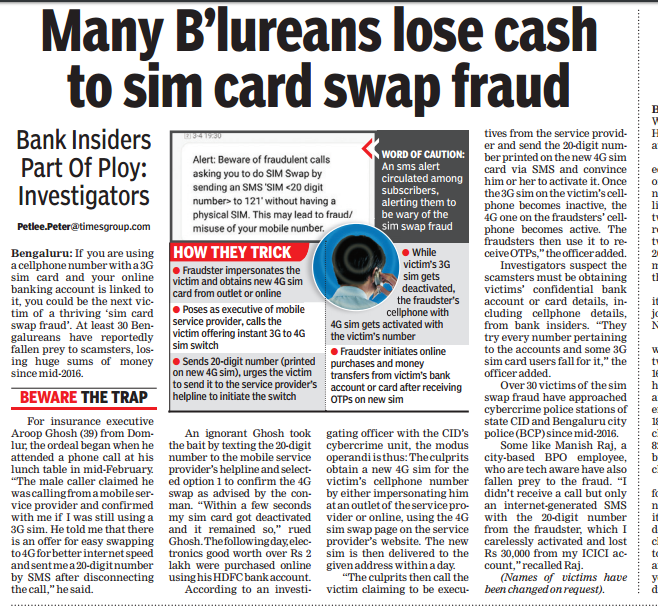 These fraudsters were getting the details of people and were later blocking their SIM Cards with the help of fake documents post which they were carrying out transactions through online banking.
They were accused of transferring 4 crore Indian Rupees effectively from various accounts. They even dared to hack the accounts of a couple of companies.
Prevention: The information required for such a scheme is gathered via various public domains and is misused later. Sharing personal information with unknown applications and domains can help in minimizing the risk of having your personal information reaching people with malicious content.
Fraudsters use the victim’s information in various scams and trick them into fraudulent activities. It is advisable therefore that the site where n individual is entering his banking or other details should be verified for authenticity, as scammer uses the fake site to get the information directly from prospective victims
These fraudsters were getting the details of people and were later blocking their SIM Cards with the help of fake documents post which they were carrying out transactions through online banking.
They were accused of transferring 4 crore Indian Rupees effectively from various accounts. They even dared to hack the accounts of a couple of companies.
Prevention: The information required for such a scheme is gathered via various public domains and is misused later. Sharing personal information with unknown applications and domains can help in minimizing the risk of having your personal information reaching people with malicious content.
Fraudsters use the victim’s information in various scams and trick them into fraudulent activities. It is advisable therefore that the site where n individual is entering his banking or other details should be verified for authenticity, as scammer uses the fake site to get the information directly from prospective victims
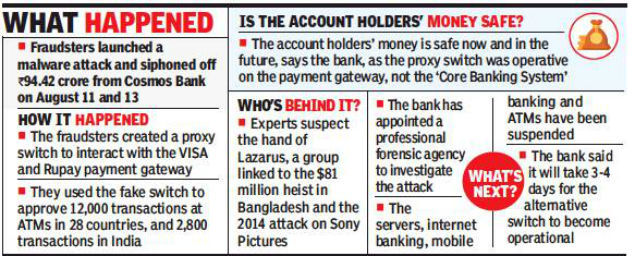 The Malware attack on the switching system raised numerous wrong messages confirming various demands of payment of visa and rupee debit card internationally. The total transactions were 14,000 in numbers with over 450 cards across 28 countries.
 There were reports about an attack on the Wipro system by major online news portals. Attack as per reported was a phishing attack and was done by a group through gift card fraud.
Even though the attack was not a massive one, many employees and client accounts were compromised. And the attack became notorious for one of the major Cyber Attacks on India
How to avoid Phishing attacks?
There were reports about an attack on the Wipro system by major online news portals. Attack as per reported was a phishing attack and was done by a group through gift card fraud.
Even though the attack was not a massive one, many employees and client accounts were compromised. And the attack became notorious for one of the major Cyber Attacks on India
How to avoid Phishing attacks?
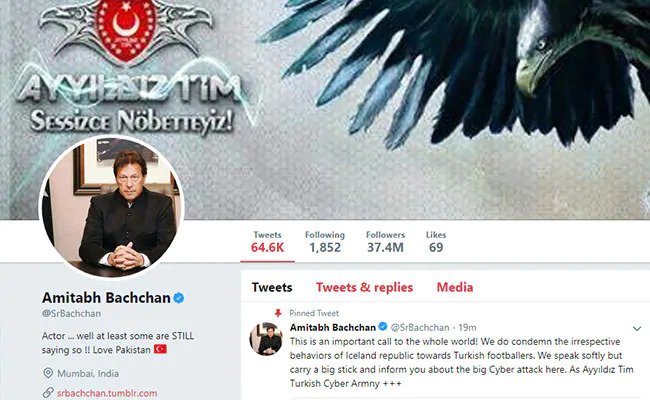 There can be a question that social media profiles are subjected to hacking all the time. But with Amitabh Bachan's statitude the hack became controversial and was announced as one of the Cyber Attacks on India
Lately, Amitabh Bachchan’s Twitter handle got hacked and the perpetrators posted hateful messages putting everybody in shock.
This can happen to big companies also. However, if the news gets out this can be a huge blow to the credibility of any company.
How to prevent Social Media Profile Hacking?
There can be a question that social media profiles are subjected to hacking all the time. But with Amitabh Bachan's statitude the hack became controversial and was announced as one of the Cyber Attacks on India
Lately, Amitabh Bachchan’s Twitter handle got hacked and the perpetrators posted hateful messages putting everybody in shock.
This can happen to big companies also. However, if the news gets out this can be a huge blow to the credibility of any company.
How to prevent Social Media Profile Hacking?
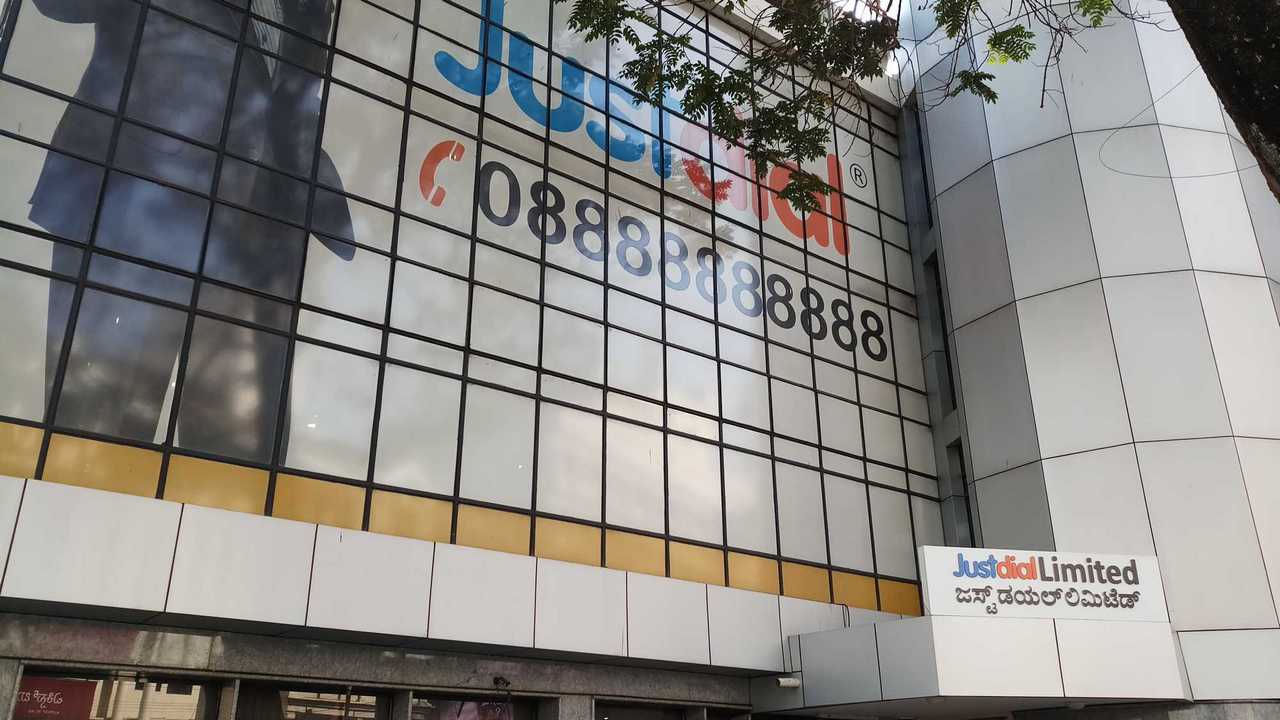 An unprotected API end was the issue in this incident. Justdial one of India’s leading local search platforms let a loose end that exposed all of their user data who accessed their services through the web, mobile, and their phone number.
Leaked data includes name, email, number, address gender, etc. the shocking part according to reports is that since 2015 the API has been exposed like this.
How to make your API secure?
An unprotected API end was the issue in this incident. Justdial one of India’s leading local search platforms let a loose end that exposed all of their user data who accessed their services through the web, mobile, and their phone number.
Leaked data includes name, email, number, address gender, etc. the shocking part according to reports is that since 2015 the API has been exposed like this.
How to make your API secure?
 How to keep sensitive data secure?
Major and Minor cyber attacks on India { Till 2021]
SIM Swap Fraud
In August 2018, two men from Navi Mumbai were arrested for cybercrime. They were involved in fraudulent activities concerning money transfers from the bank accounts of numerous individuals by getting their SIM card information through illegal means.
These fraudsters were getting the details of people and were later blocking their SIM Cards with the help of fake documents post which they were carrying out transactions through online banking.
They were accused of transferring 4 crore Indian Rupees effectively from various accounts. They even dared to hack the accounts of a couple of companies.
Prevention: The information required for such a scheme is gathered via various public domains and is misused later. Sharing personal information with unknown applications and domains can help in minimizing the risk of having your personal information reaching people with malicious content.
Fraudsters use the victim’s information in various scams and trick them into fraudulent activities. It is advisable therefore that the site where n individual is entering his banking or other details should be verified for authenticity, as scammer uses the fake site to get the information directly from prospective victims
Cyber Attack on Cosmos Bank
A daring cyber attack was carried in August 2018 on Cosmos Bank’s Pune branch which saw nearly 94 Crores rupees being siphoned off. Hackers wiped out money and transferred it to a Hong Kong-situated bank by hacking the server of Cosmos Bank. A case was filed by Cosmos bank with Pune cyber cell for the cyber attack. Hackers hacked into the ATM server of the bank and stole the details of many visa and rupee debit card owners. The attack was not on a centralized banking solution of Cosmos bank. The balances and total accounts statistics remained unchanged and there was no effect on the bank account of holders. The switching system which acts as an interacting module between the payment gateways and the bank’s centralized banking solution was attacked.
The Malware attack on the switching system raised numerous wrong messages confirming various demands of payment of visa and rupee debit card internationally. The total transactions were 14,000 in numbers with over 450 cards across 28 countries.
Also Know: Cyber Security New Year’s Resolutions For 2020
On the national level, it has been done through 400 cards and the transactions involved were 2,800. This was the first malware attack in India against the switching system which broke the communication between the payment gateway and the bank. Prevention: Hardening of the security systems by limiting their functions and performance only to authorized people can be the way forward. Any unauthorized access to the network should immediately set an alarm to block all access to the bank’s network. Also, to minimize risk, enabling a two-factor authentication might help. Through testing, potential vulnerabilities can be fished out and can make the entire digital part of the banking system safe.ATM System Hacked in Kolkata
In July 2018 fraudsters hacked into Canara bank ATM servers and wiped off almost 20 lakh rupees from different bank accounts. The number of victims was over 50 and it was believed that they were holding the account details of more than 300 ATM users across India. The hackers used skimming devices on ATMs to steal the information of debit cardholders and made a minimum transaction of INR 10,000 and a maximum of INR 40,000 per account.On 5 August 2018, two men were arrested in New Delhi who were working with an international gang that uses skimming activities to extract the details of the bank account. Prevention: Enhancement of the security features in ATM and ATM monitoring systems can prevent any misuse of data. Another way to prevent fraudulent activity is to minimize the risk of skimming by using lockbox services to receive and transfer money safely. This uses an encrypted code that is safer than any other payment. Websites Hacked: Over 22,000 websites were hacked between the months of April 2017 and January 2018. As per the information presented by the Indian Computer Emergency Response Team, over 493 websites were affected by malware propagation including 114 websites run by the government. The attacks were intended to gather information about the services and details of the users in their network. Prevention: Using a more secure firewall for networks and servers which can block any unauthorized access from outside the network is perhaps the best idea. Personal information of individuals is critical for users and cannot be allowed to be taped into by criminals. Thus, monitoring and introducing a proper network including a firewall and security system may help in minimizing the risk of getting hacked.
Phishing Attack on Wipro
There were reports about an attack on the Wipro system by major online news portals. Attack as per reported was a phishing attack and was done by a group through gift card fraud.
Even though the attack was not a massive one, many employees and client accounts were compromised. And the attack became notorious for one of the major Cyber Attacks on India
How to avoid Phishing attacks?
- Always think before you click. Phishing links can impersonate as authentic links with some minor changes that might not be visible at a single glance. Make sure that you have read the complete link before clicking it
- Install measures that can effectively prevent such attacks
- Make sure that the websites you are accessing are secure. Usually, a secure website will have a security certificate to safeguard all the customer information. Make sure that that website begins with HTTPS and has a lock symbol on the extreme left of the address bar.
- Check your online account on a regular basis and make sure that there are no suspicious activities. Change the password frequently.
- Update your browsers regularly as updates often will have security patches for existing loopholes.
- Keep your personal details secret
Bib B Amitabh Bachchan ‘s Twitter Account Hacked!
There can be a question that social media profiles are subjected to hacking all the time. But with Amitabh Bachan's statitude the hack became controversial and was announced as one of the Cyber Attacks on India
Lately, Amitabh Bachchan’s Twitter handle got hacked and the perpetrators posted hateful messages putting everybody in shock.
This can happen to big companies also. However, if the news gets out this can be a huge blow to the credibility of any company.
How to prevent Social Media Profile Hacking?
- Social media is infested with third-party applications. Make sure that you are using legitimate authorized applications
- Use strong credentials and change them often
- Install proper antivirus
- Enable two-factor authentication
- Make sure that proper web application firewall is installed
- Strengthen network security by login expiration, changing passwords,
- Make sure that the admin level of your website is not exposed with a simple password
- Change the database prefix from wp6 to something random which can’t be guessed
- Stay updated regarding the latest hacking threats
- Make sure that a proper web application firewall is installed
- Strengthen network security by login expiration, changing passwords,
- Make sure that the admin level of your website is not exposed with a simple password
- Change the database prefix from wp6 to something random which can’t be guessed
- Stay updated regarding the latest hacking threats
Personal Data Exposed from JustDial Database
An unprotected API end was the issue in this incident. Justdial one of India’s leading local search platforms let a loose end that exposed all of their user data who accessed their services through the web, mobile, and their phone number.
Leaked data includes name, email, number, address gender, etc. the shocking part according to reports is that since 2015 the API has been exposed like this.
How to make your API secure?
- Validate all the incoming data
- Use the essential method for authentication verification
- Monitor and manage using automated scripts
- Encrypt data
How to keep sensitive data secure?
- Periodical cybersecurity posture assessment
- Educate the employees on secure network practices
- Adopt a strict BYOD (Bring your own device) policy
- Do heavy encryption on the data that needs to be protected
- Deploy a system that can monitor frequently
- Network security
- System software security
- Client-side application security
- Server-side application security

Recent Posts
- Positive Vs. Negative Testing: Examples, Difference & ImportanceApril 22nd, 2024
- What Is Statement Coverage Testing? Explained With Examples!April 13th, 2024
- 60 Important Automation Testing Interview Questions & AnswersApril 2nd, 2024
- Verification vs. Validation: Key Differences and Why They MatterMarch 19th, 2024
- What is Compatibility Testing? Example Test Cases Included!March 18th, 2024