

Blog Category
 Mobile App Testing(136)
 Web App Testing(11)
 Game Testing(24)
 Automation Testing(73)
 Security Testing(32)
 Performance Testing(15)
 Selenium(32)
 Test Management(15)
 Usability Testing(24)
 Guides and Tutorials(99)
 Best Practices(28)
 Expert Insights(20)
 Software Testing Events(4)
Our Services
- App Testing(136)
- Web App Testing(11)
- Game Testing(24)
- Automation Testing(79)
 Load Testing(9)
- Security Testing(32)
 Performance Testing(15)
 Hire a Tester(71)
Our Careers
What is Rational Unified Process Methodology?
May 2nd, 2019
Rational Unified Process in Software Testing
Rational Unified Process (RUP) methodology uses the object-oriented approach in its design and the use of UML (Unified Modeling Language) notation is designed and documented to illustrate the processes in action. It uses commercially proven techniques and practices.
It is a process considered heavy and preferably applicable to large development teams and large projects, but the fact that it is extensively customizable allows it to be adapted to projects of any scale.
 Specifics
For project management, the RUP(Rational Unified Process) model provides a disciplined solution such as the tasks and responsibilities outlined within a software development organization.
RUP (Rational Unified Process) is, in itself, a software product. It is modular and automated, and its entire methodology is supported by several development tools integrated and sold by IBM through its "Rational Suites."
The methods of competition in the field of software engineering include "clean rooms" (considered heavy) and agile (light) such as Extreme Programming (XP-Extreme Programming), Scrum, FDD, and others.
There are certain guidelines and templates that are defined, for the staff members of a production cycle, by RUP: part of the client and an evaluation of the progress of the project by its management. It helps developers to stay focused on the project.
Management Requirements
Proper documentation is essential for any large-scale project; note that RUP describes how to document functionality, system limitations, design restrictions, and business requirements.
The use cases and the scenarios are examples of dependent process artifacts, which have been considered much more effective in capturing functional requirements.
The Use of a Component-Based Architecture
The component-based architecture creates a system that can be easily extensible, promoting reuse and software an intuitive understanding. A component usually refers to an object in object-oriented programming.
RUP provides a systematic way to build this type of system, focusing on the production of an executable architecture in the early stages of the project, that is, before committing resources on a large scale.
The Components referred to here are generally included in the infrastructures already existing in the place. These infrastructures include CORBA as well as Component Object Model (COM).
The Use of Visual Software Models in the Rup Model
By abstracting the programming of your code and representing it using graphical building blocks, RUP can be an effective way to get an overview of a solution.
The use of visual models can also allow individuals with a less technical profile (as clients) to have a better understanding of a given problem, and thus be more involved in the project as a whole.
The UML modeling language has become an industry standard for representing projects, and is widely used by RUP!
Specifics
For project management, the RUP(Rational Unified Process) model provides a disciplined solution such as the tasks and responsibilities outlined within a software development organization.
RUP (Rational Unified Process) is, in itself, a software product. It is modular and automated, and its entire methodology is supported by several development tools integrated and sold by IBM through its "Rational Suites."
The methods of competition in the field of software engineering include "clean rooms" (considered heavy) and agile (light) such as Extreme Programming (XP-Extreme Programming), Scrum, FDD, and others.
There are certain guidelines and templates that are defined, for the staff members of a production cycle, by RUP: part of the client and an evaluation of the progress of the project by its management. It helps developers to stay focused on the project.
Management Requirements
Proper documentation is essential for any large-scale project; note that RUP describes how to document functionality, system limitations, design restrictions, and business requirements.
The use cases and the scenarios are examples of dependent process artifacts, which have been considered much more effective in capturing functional requirements.
The Use of a Component-Based Architecture
The component-based architecture creates a system that can be easily extensible, promoting reuse and software an intuitive understanding. A component usually refers to an object in object-oriented programming.
RUP provides a systematic way to build this type of system, focusing on the production of an executable architecture in the early stages of the project, that is, before committing resources on a large scale.
The Components referred to here are generally included in the infrastructures already existing in the place. These infrastructures include CORBA as well as Component Object Model (COM).
The Use of Visual Software Models in the Rup Model
By abstracting the programming of your code and representing it using graphical building blocks, RUP can be an effective way to get an overview of a solution.
The use of visual models can also allow individuals with a less technical profile (as clients) to have a better understanding of a given problem, and thus be more involved in the project as a whole.
The UML modeling language has become an industry standard for representing projects, and is widely used by RUP!
 Initiation or Design: emphasis on the scope of the system;
Preparation: emphasis on architecture;
Construction: emphasis on development;
Transition: emphasis on the application.
RUP is also based on the 4 Ps:
Initiation or Design: emphasis on the scope of the system;
Preparation: emphasis on architecture;
Construction: emphasis on development;
Transition: emphasis on the application.
RUP is also based on the 4 Ps:
 Understanding the business means that software engineers must understand the structure and dynamics of the target company (the client), the current problems that the organization is facing and potential methods and strategies for making amends.
Another important aspect that must not be undermined is that the relevant parties such as the developers as well as the customers and also the end-users must have a clear understanding about the organization, and an important feature of this understanding is that it must be common among all the parties involved.
Business modeling explains how to describe the vision of an organization in which the system will be implemented and how to use this vision as a basis to describe the processes, functions, and responsibilities.
Course Requirements
This course explains how to get requests from interested parties ("interested parties") and convert them into a set of requirements that the products work within the system to be built and provide the detailed requirements for what is necessary for the system.
Analysis and Design of the Discipline ("Design")
The purpose of the analysis and design is to show how the system will be carried out. The objective is to build a system that:
Execute in a specific execution environment, tasks and functions specified in the descriptions of use cases
Satisfy all your needs
It is easy to maintain when there are no changes in the functional requirements, the results of the project in an analysis and design model optionally has an analysis model.
The design model is utilized as a conceptual version of the source code, displaying only the bare minimum. This allows the user of any one inspecting to ascertain the style in which the source code has been rendered.
The design model is rendered in such a way that it contains different divisions of designs. These divisions are stored within definite subsystems.
Every subsystem has a distinct interface that is precisely designed. It also contains descriptions of how the objects in these classes collaborate to carry out the design of use cases.
The Discipline Implementation
The effects of the application are:
Understanding the business means that software engineers must understand the structure and dynamics of the target company (the client), the current problems that the organization is facing and potential methods and strategies for making amends.
Another important aspect that must not be undermined is that the relevant parties such as the developers as well as the customers and also the end-users must have a clear understanding about the organization, and an important feature of this understanding is that it must be common among all the parties involved.
Business modeling explains how to describe the vision of an organization in which the system will be implemented and how to use this vision as a basis to describe the processes, functions, and responsibilities.
Course Requirements
This course explains how to get requests from interested parties ("interested parties") and convert them into a set of requirements that the products work within the system to be built and provide the detailed requirements for what is necessary for the system.
Analysis and Design of the Discipline ("Design")
The purpose of the analysis and design is to show how the system will be carried out. The objective is to build a system that:
Execute in a specific execution environment, tasks and functions specified in the descriptions of use cases
Satisfy all your needs
It is easy to maintain when there are no changes in the functional requirements, the results of the project in an analysis and design model optionally has an analysis model.
The design model is utilized as a conceptual version of the source code, displaying only the bare minimum. This allows the user of any one inspecting to ascertain the style in which the source code has been rendered.
The design model is rendered in such a way that it contains different divisions of designs. These divisions are stored within definite subsystems.
Every subsystem has a distinct interface that is precisely designed. It also contains descriptions of how the objects in these classes collaborate to carry out the design of use cases.
The Discipline Implementation
The effects of the application are:
 This will, in turn, have a massive reduction in the costs involved with the rectification of the defects. This is the iterative approach proposed by the Rational Unified Process.
In order for the test to bear fruits and have the best possible outcomes, the tests need to be conducted on four parameters of quality and also there must be set standards which need to be met for the project to be considered as have passed the test.
This will, in turn, have a massive reduction in the costs involved with the rectification of the defects. This is the iterative approach proposed by the Rational Unified Process.
In order for the test to bear fruits and have the best possible outcomes, the tests need to be conducted on four parameters of quality and also there must be set standards which need to be met for the project to be considered as have passed the test.
Specifics
For project management, the RUP(Rational Unified Process) model provides a disciplined solution such as the tasks and responsibilities outlined within a software development organization.
RUP (Rational Unified Process) is, in itself, a software product. It is modular and automated, and its entire methodology is supported by several development tools integrated and sold by IBM through its "Rational Suites."
The methods of competition in the field of software engineering include "clean rooms" (considered heavy) and agile (light) such as Extreme Programming (XP-Extreme Programming), Scrum, FDD, and others.
There are certain guidelines and templates that are defined, for the staff members of a production cycle, by RUP: part of the client and an evaluation of the progress of the project by its management. It helps developers to stay focused on the project.
Management Requirements
Proper documentation is essential for any large-scale project; note that RUP describes how to document functionality, system limitations, design restrictions, and business requirements.
The use cases and the scenarios are examples of dependent process artifacts, which have been considered much more effective in capturing functional requirements.
The Use of a Component-Based Architecture
The component-based architecture creates a system that can be easily extensible, promoting reuse and software an intuitive understanding. A component usually refers to an object in object-oriented programming.
RUP provides a systematic way to build this type of system, focusing on the production of an executable architecture in the early stages of the project, that is, before committing resources on a large scale.
The Components referred to here are generally included in the infrastructures already existing in the place. These infrastructures include CORBA as well as Component Object Model (COM).
The Use of Visual Software Models in the Rup Model
By abstracting the programming of your code and representing it using graphical building blocks, RUP can be an effective way to get an overview of a solution.
The use of visual models can also allow individuals with a less technical profile (as clients) to have a better understanding of a given problem, and thus be more involved in the project as a whole.
The UML modeling language has become an industry standard for representing projects, and is widely used by RUP!
Know More: Read about Exclusive details of Agile Testing
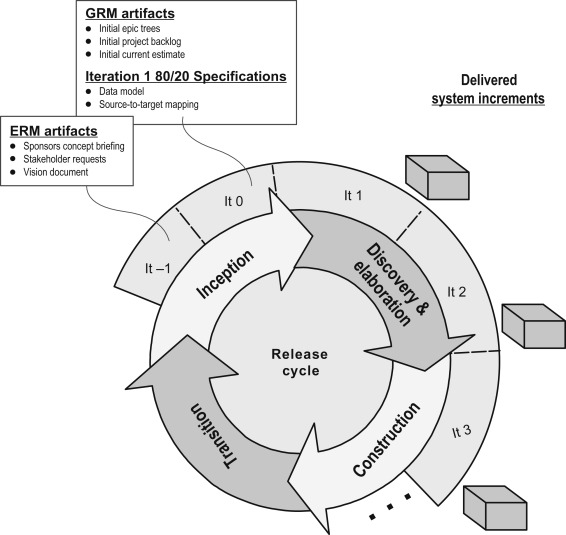
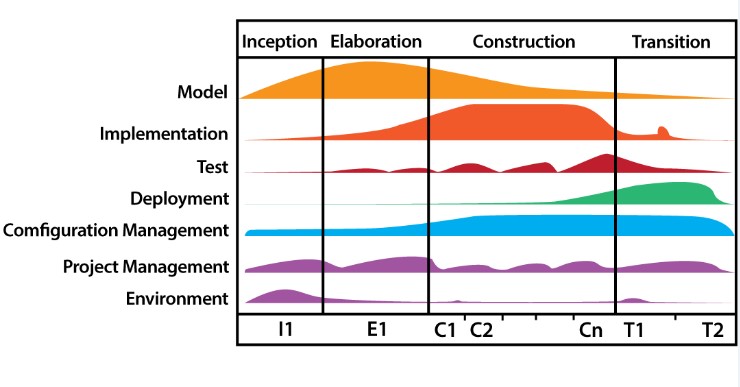
Check Software Quality It does not ensure software quality is the most common failure in all computer systems projects. Usually, one thinks about the quality of the software after the completion of the projects or the quality is the responsibility of a different team development team. Management and Control Change Software In all software projects, the existence of change is inevitable. RUP defines methods to control and monitor changes. As a small change can affect applications in totally unpredictable ways, change control is essential to the success of a project. RUP (Rational Unified Process)also defines the areas of work and security, which guarantees a programmer that changes in another system will not affect your system. Phases of the RUP Methodology So far these guidelines are general, to be adhered to go through the life of a project cycle. The phases (see figure below) indicate the emphasis given in the project at a given moment. To capture the temporal dimension of a project, RUP divides the project into four different phases:
Initiation or Design: emphasis on the scope of the system;
Preparation: emphasis on architecture;
Construction: emphasis on development;
Transition: emphasis on the application.
RUP is also based on the 4 Ps:
- People
- Design
- Product
- Process
Understanding the business means that software engineers must understand the structure and dynamics of the target company (the client), the current problems that the organization is facing and potential methods and strategies for making amends.
Another important aspect that must not be undermined is that the relevant parties such as the developers as well as the customers and also the end-users must have a clear understanding about the organization, and an important feature of this understanding is that it must be common among all the parties involved.
Business modeling explains how to describe the vision of an organization in which the system will be implemented and how to use this vision as a basis to describe the processes, functions, and responsibilities.
Course Requirements
This course explains how to get requests from interested parties ("interested parties") and convert them into a set of requirements that the products work within the system to be built and provide the detailed requirements for what is necessary for the system.
Analysis and Design of the Discipline ("Design")
The purpose of the analysis and design is to show how the system will be carried out. The objective is to build a system that:
Execute in a specific execution environment, tasks and functions specified in the descriptions of use cases
Satisfy all your needs
It is easy to maintain when there are no changes in the functional requirements, the results of the project in an analysis and design model optionally has an analysis model.
The design model is utilized as a conceptual version of the source code, displaying only the bare minimum. This allows the user of any one inspecting to ascertain the style in which the source code has been rendered.
The design model is rendered in such a way that it contains different divisions of designs. These divisions are stored within definite subsystems.
Every subsystem has a distinct interface that is precisely designed. It also contains descriptions of how the objects in these classes collaborate to carry out the design of use cases.
The Discipline Implementation
The effects of the application are:
- With reference to the layered subsystems organized for an application, the organization code is configured.
- The different classes or divisions of components are carried out. These components include
- Source Files
- Executables and
- Binaries
- Components developed as units are tested
- Check the interaction between objects
- Check the correct integration of all software components
- Check that all requirements have been executed correctly
- Identify and ensure that defects are addressed before the software implementation
- Make sure that all defects are corrected, reviewed and closed
This will, in turn, have a massive reduction in the costs involved with the rectification of the defects. This is the iterative approach proposed by the Rational Unified Process.
In order for the test to bear fruits and have the best possible outcomes, the tests need to be conducted on four parameters of quality and also there must be set standards which need to be met for the project to be considered as have passed the test.
Recent Posts
- Positive Vs. Negative Testing: Examples, Difference & ImportanceApril 22nd, 2024
- What Is Statement Coverage Testing? Explained With Examples!April 13th, 2024
- 60 Important Automation Testing Interview Questions & AnswersApril 2nd, 2024
- Verification vs. Validation: Key Differences and Why They MatterMarch 19th, 2024
- What is Compatibility Testing? Example Test Cases Included!March 18th, 2024

Search Results for:
Loading...
Overview
Services
Industries


Follow us on
Contact Us

Copyright © 2026 | Digital Marketing by Jointviews